What it does
Custom kitchens need experienced planners to turn wishes into something that actually fits the room. That takes hours per request, and mistakes often show up only in production, where they're most expensive.
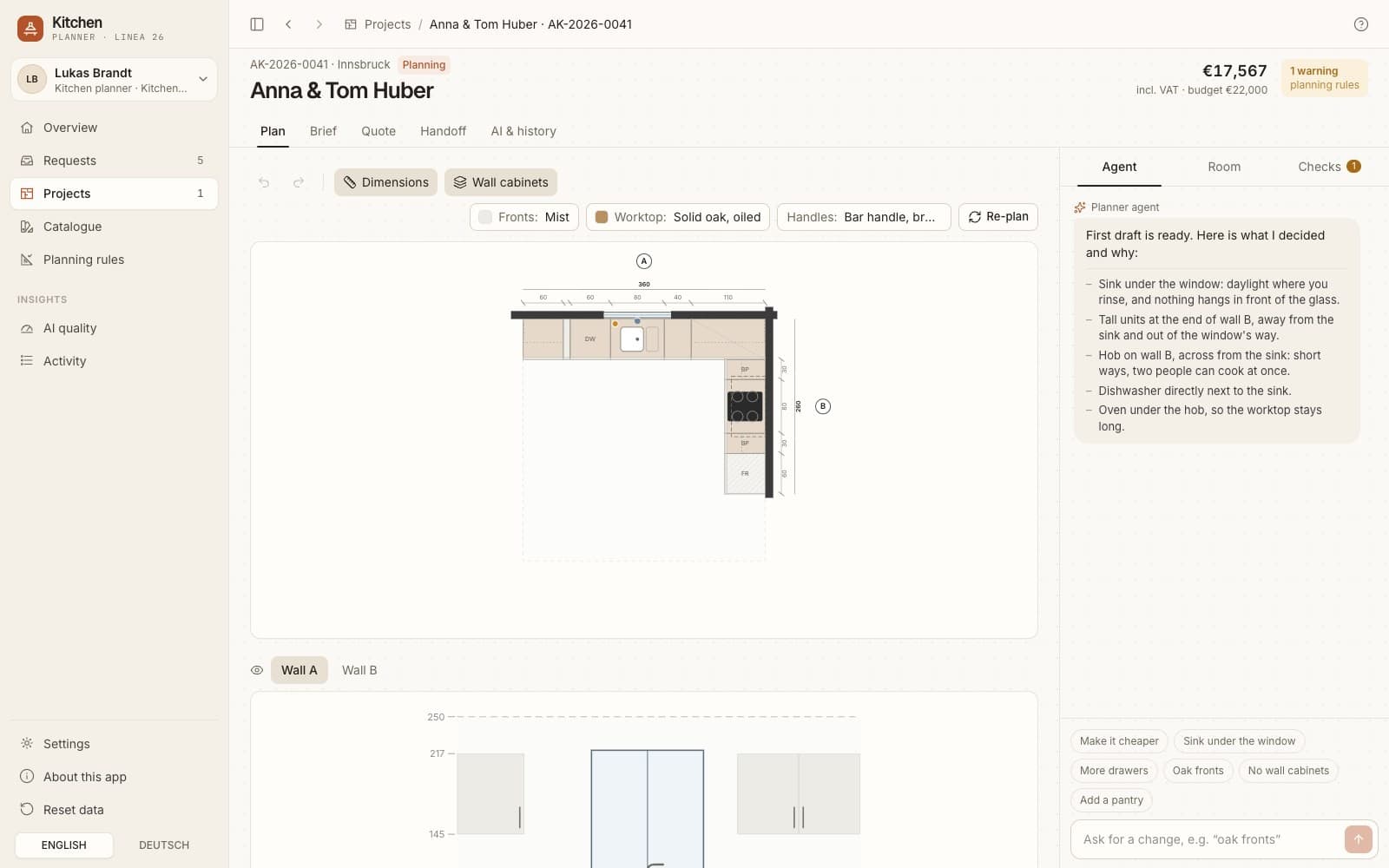
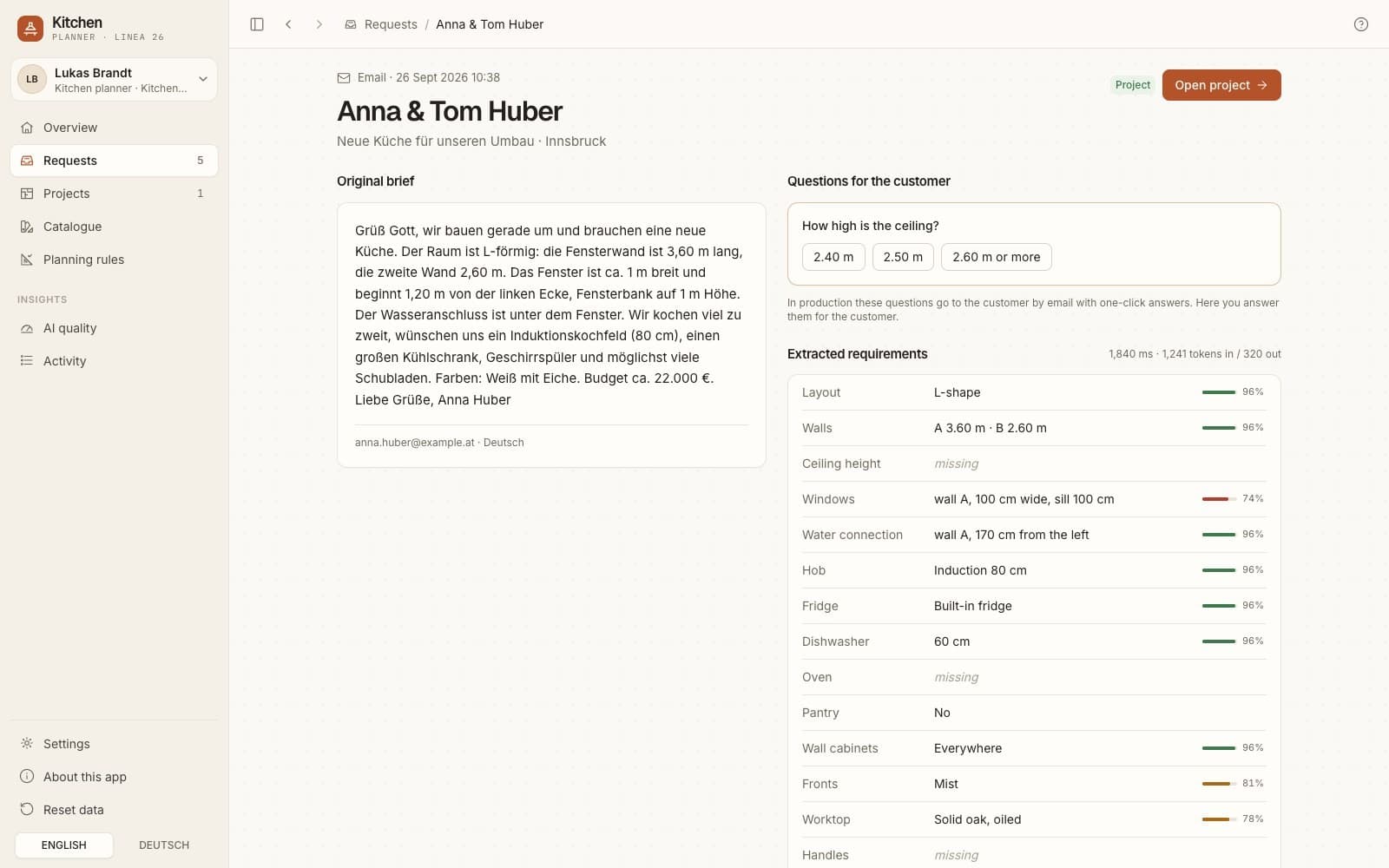
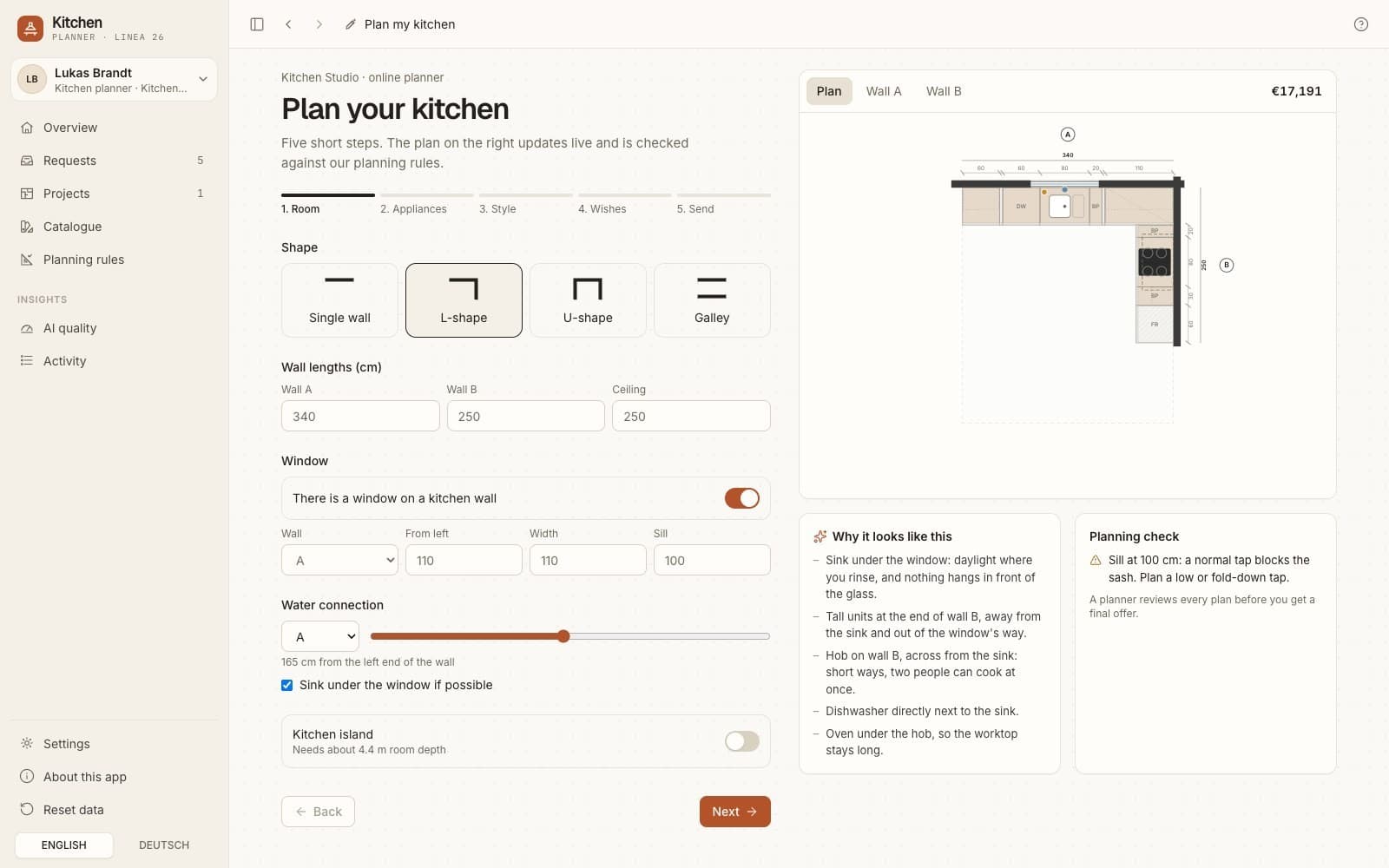
Here the customer writes an email or clicks through a short form. The planner opens a first draft that already fits the walls, respects the window and the water pipe, has a price and explains every decision.
The numbers
23
planning rules checked on every change
15 min
from brief to first proposal, target
0
prices or sizes made up by the model
Brief to first proposal
- Planning by hand3 h
- With the planner15 min
Estimate. The planner still reviews every plan before a customer sees an offer.
How it works
The language model only translates words into requirements and asks when something is missing. Geometry, prices and whether the kitchen can be built are decided by code, so the answer is the same every time.
- InputBriefEmail, online form or showroom notes
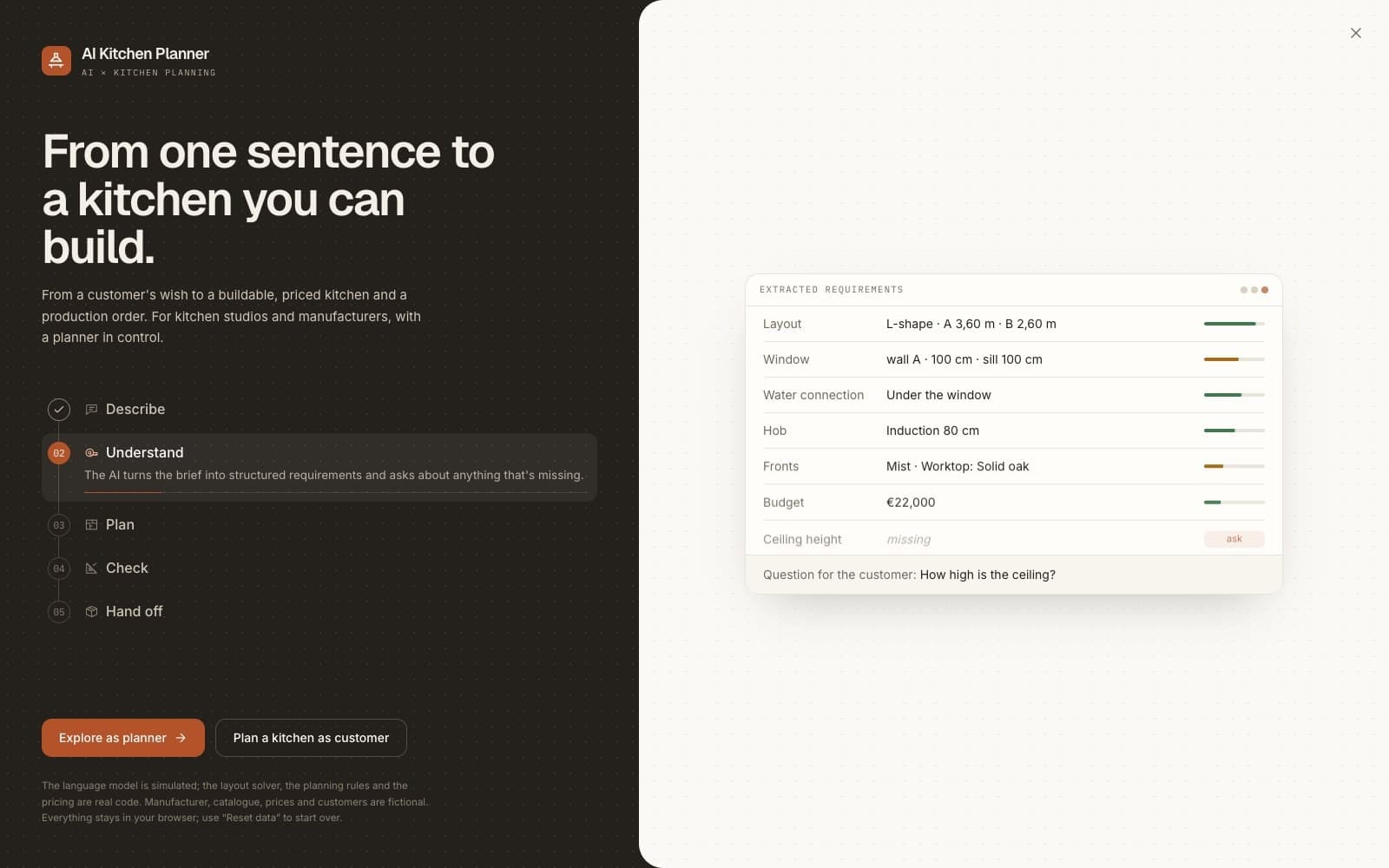
- AIUnderstandExtracts room, appliances and wishes, asks what's missing
- CodePlanSolver places the modules and explains why
- CodeCheck23 rules, from clearances to budget
- PersonApprovePlanner edits, customer approves
- OutputHand offQuote PDF and a production order as JSON
- [ Next.js ]
- [ TypeScript ]
- [ Zustand ]
- [ React PDF ]
- [ Layout solver ]
- [ Rules engine ]
Screens
What it brings
Faster first offer
Planners start from a draft that already fits instead of a blank screen.
Fewer surprises in production
Rules catch a hob under the window or a tight island before anything is cut.
Planning around the clock
Customers can sketch their kitchen on a Sunday evening and get a real answer.
Clean data for the factory
Every part with position, size and front, ready for the production system.
Good to know
The manufacturer, catalogue and customers are fictional, and the language model is simulated with recorded answers plus an offline parser for typed text. The layout solver, all 23 rules, the pricing and the production order are real code. Going live needs real model calls, a database, mail intake and a link to the factory's system.
→
Proposal Studio